

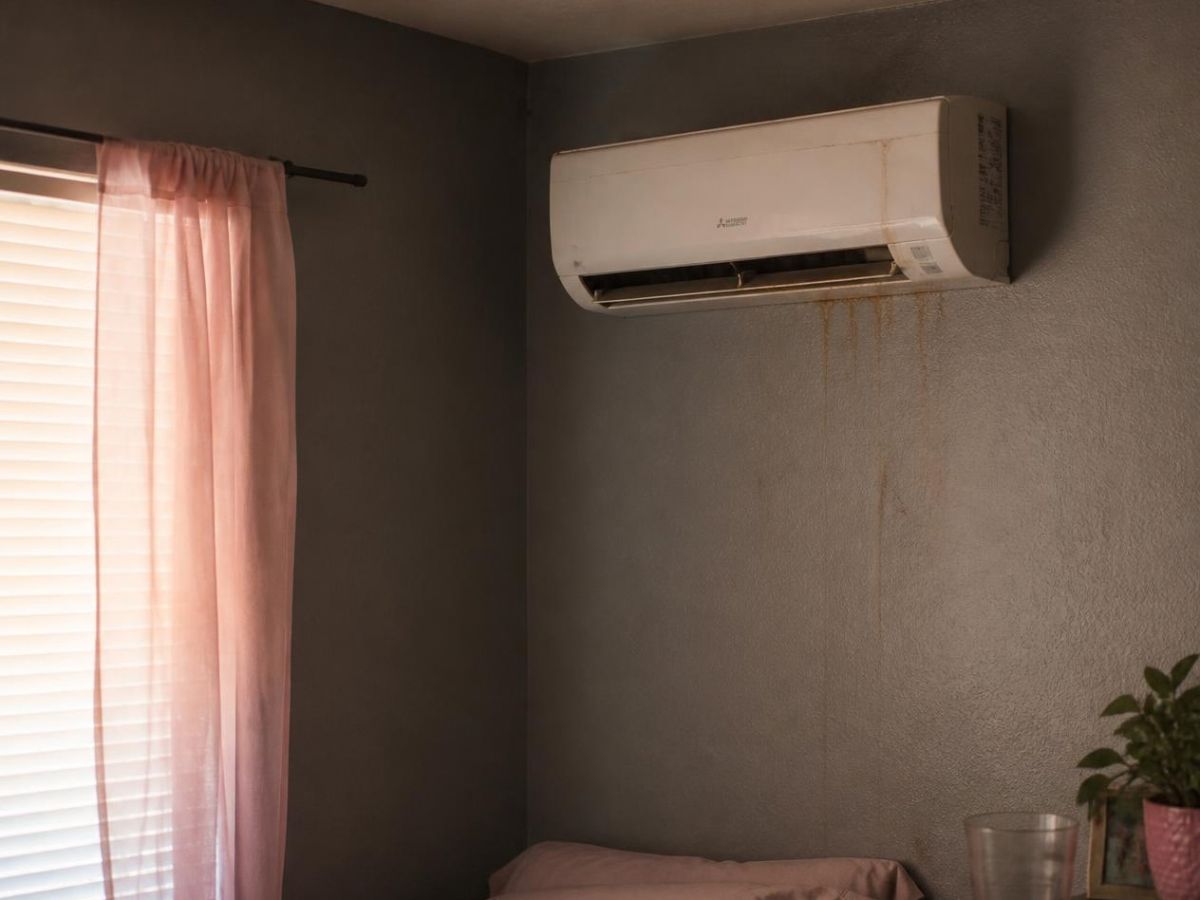
If your ductless mini split is dripping water inside your Albuquerque home, the most common cause is a clogged condensate drain line. Ductless mini splits pull moisture out of the air as they cool, and that water is supposed to run down the drain pan and out through a small line to the outside. When the line plugs up, the water has nowhere to go, so it backs up and drips down your wall instead.
It often shows up during Albuquerque’s monsoon, from roughly July into September. During those weeks the air holds more moisture, your mini split condenses more water, and a line that was borderline all summer finally clogs and overflows.
A blockage builds slowly from the inside. Dust, algae, and grime collect along the wall of that thin drain tube until the opening narrows to nothing. Albuquerque’s spring wind season kicks up a lot of fine dust, and what gets past the filter can end up in the drain pan and line.
How much does it cost to fix a leak in a mini split?
Most mini split leaks come from a clogged drain line, and clearing that line is one of the cheaper HVAC repairs. Prices vary by company, but a service call to clear and flush a drain line usually runs somewhere around $75 to $250, depending on how bad the clog is and how the line is routed.
Where the price climbs is when the leak is not just a clog. A cracked or rusted drain pan, an indoor unit that was mounted at the wrong angle, or a failed condensate pump all cost more because they need parts or a remount. Low refrigerant that froze the coil and then dripped as it thawed is a different repair entirely and needs a licensed tech, since handling refrigerant requires EPA certification.
Can I still run my mini split if it’s leaking water?
No, shut it off until the cause is found and fixed. Running a leaking mini split keeps pushing water where it does not belong, and that water damages drywall, wood floors, and ceilings, and it gives mold a place to start. In an Albuquerque home with a wall-mounted head, the drip usually runs straight down the wall below the unit, so the longer it runs, the more finish and framing get soaked.
If the leak is coming from a frozen coil, running the unit is worse. A dirty filter or low refrigerant can freeze the evaporator coil, and forcing the system to keep running with ice on the coil can damage the compressor and other parts. Turn the unit off and let the coil thaw completely, keeping a towel or bucket underneath to catch the melt. Once it is off, pull the washable filter and check whether it is caked with dust. A rinsed filter often clears a freeze-up, but if the coil ices again after it dries and goes back in, that points to a refrigerant problem that needs a tech.
How to unclog a mini split drain line?
The most reliable way to clear a clogged mini split drain line is to pull the suction at the outdoor end of the line with a wet/dry vacuum. Find where the drain tube exits your home, seal your shop vac hose against the opening as tightly as you can, and run it for a couple of minutes. That pulls the dust, algae, and grime back out toward you and gets water moving again. If you cannot get a good seal, wrapping a rag around the joint helps.
A few things to keep in mind before you start:
- Turn the unit off at the breaker first so it is not making new condensate while you work.
- Do not pour bleach into the line. Bleach can damage parts inside the unit, which can turn a cheap fix into a part replacement.
- A diluted white vinegar flush is a gentler option that helps break down algae without wrecking the pipe.
- Mop up standing water in the pan and on the floor right away to limit damage.
If the line clears and water flows freely, you caught it early. If it clogs again within days, or the unit looks tilted away from the drain side, it may have been installed wrong and needs a pro to re-mount it or reroute the line.
How often should AC drain lines be cleaned?
Advice varies, from checking the drain line every month to flushing it once a year, so check the manual for your unit. In Albuquerque, the timing that matters most is the run-up to monsoon season. A good local rhythm is to flush the line in late spring before the cooling season, then check it again as monsoon humidity builds in July.
Homes with pets or a lot of dust may need the line checked more often, since dust and hair add to the buildup. The simplest way to stay ahead of it is a yearly maintenance visit that includes a drain flush and coil cleaning.
A mini split dripping down your wall usually traces back to a drain line clogged with dust and algae, and it will keep getting worse until the line is cleared. Tru Mechanical Heating & Cooling is a family-owned, licensed and insured team, and our techs are EPA 608 Universal certified. We clear these clogs, check the pan and coil, and get your unit draining right again. If your ductless system is leaking, contact us for a free quote or a service visit, or call (505) 328-0743 and we will get you scheduled.