

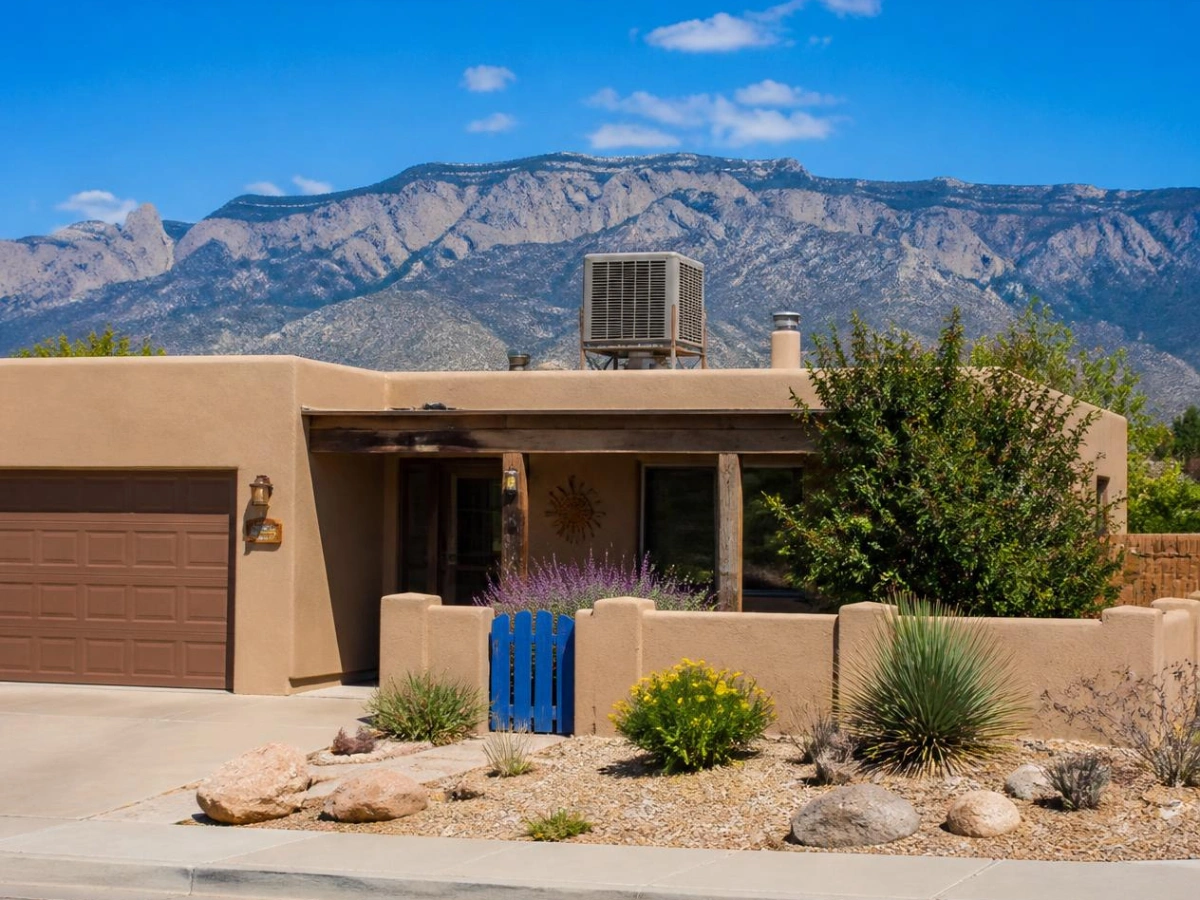
The difference comes down to what happens to your swamp cooler. A seasonal air conversion, sometimes called a dual setup, adds refrigerated air but leaves your evaporative cooler in place so you can run whichever system fits the weather. A permanent conversion removes or caps the swamp cooler for good and makes refrigerated air your only cooling system. Both give you real AC in Albuquerque. The split is whether you keep the option to switch back.
That choice matters more here than in most places because of one thing: monsoon season. In Albuquerque, the monsoon officially runs from mid June through the end of September, but the heaviest activity comes in July and August, peaking in late July and early August. Once that afternoon moisture rolls in, your swamp cooler loses its edge.
Here is why the timing drives the decision. Evaporative coolers pull warm outside air through wet pads, and that only cools the air when the outside air is dry enough to soak up more moisture. In Albuquerque, humidity often sits at its lowest in late spring and early summer, with June averaging around 23 to 30 percent and May close to 32 percent, so a well-tuned cooler keeps a home comfortable for very little money. Local data shows afternoon humidity can climb to 40, 50, even 60 percent once the monsoon settles in, and at that point the evaporation process stalls and the cooler starts pushing warm, damp air instead of cool air. A seasonal setup lets you lean on the cheap-to-run cooler in the dry stretch and flip to refrigerated air when the storms arrive. A permanent conversion skips all of that and runs refrigerated air the whole season.
One more Albuquerque wrinkle shapes both paths. Many older homes here were built around evaporative cooling, which moves a large volume of air at low pressure through oversized ducts. Refrigerated air pushes a smaller volume of colder air at higher pressure, so the existing ductwork often needs modification either way. Because we run an in-house sheet metal shop and fabricate our own ductwork, that duct question is something we can size and build to fit your specific home rather than working around whatever the cooler left behind.
Is seasonal air conversion worth it?
For a lot of Albuquerque homeowners, yes, because it matches how our cooling season actually behaves. You get to run the swamp cooler through the dry stretch of May and June, when it costs a fraction of what AC costs to operate, and then switch to refrigerated air once monsoon humidity makes the cooler ineffective. That flexibility is the whole point.
The tradeoff is that you are maintaining two systems instead of one. The swamp cooler still needs its spring startup and fall winterization, and Albuquerque’s hard water leaves mineral scale on the pads and pan, so the annual upkeep does not disappear. You also keep the roof or wall penetration for the cooler.
A seasonal conversion tends to make the most sense if your swamp cooler is still in decent shape and you want lower summer bills for part of the year. If the cooler is corroded or near the end of its life, paying to keep it running is harder to justify. Our cooling team can look at the condition of your current cooler and tell you honestly which direction pencils out.
Which setup is cheaper to run?
Comparing the two conversion types, a seasonal dual setup is usually cheaper to run over a full summer, and the reason is the calendar. When you run the swamp cooler during Albuquerque’s dry months, you are using far less electricity than refrigerated air pulls, so those weeks in May and June cost very little. You only switch to the more expensive refrigerated air once the monsoon makes the cooler ineffective. In Albuquerque, the monsoon officially runs from mid June through the end of September, with the wettest stretch usually falling in July and August.
A permanent conversion runs refrigerated air across the entire cooling season, including the dry early weeks when a cooler would have handled the job cheaply. That is where the seasonal setup pulls ahead on operating cost. You are choosing the low-cost system for the part of summer when it works well.
Two things temper that math. Keeping the cooler means keeping its water use and its annual maintenance, so the seasonal savings are not pure. And a permanent conversion buys back convenience by removing the changeover work entirely. If you value one thermostat and no seasonal fuss more than the summer savings, the permanent route can be worth the higher run cost to you.
Can you switch back to the swamp cooler after a seasonal conversion?
Yes, and that is exactly what a seasonal conversion is designed to do. The swamp cooler stays fully installed and operational, so you can move between it and the refrigerated air whenever the weather calls for it. Run the cooler on dry days, switch to AC when monsoon moisture builds, and switch back once the storms clear out. Nothing has to be reinstalled.
A permanent conversion is a different story. Once the cooler is removed or capped and the opening is sealed, switching back is not a simple flip. It would mean re-installing a cooler and reopening the roof or wall penetration, which is real work and real cost, not a seasonal changeover.
So the reversibility question is the cleanest way to tell the two options apart. A seasonal setup keeps both systems and lets you switch as often as you like. A permanent swamp cooler conversion commits you to refrigerated air and takes the cooler out of the picture. If you like the idea of keeping both, tell us up front, because we plan the ductwork and the cooler connection differently depending on which way you are leaning.
How long does each conversion take to install?
Most conversions in Albuquerque wrap up in about one to two days, and that holds for both the seasonal and permanent versions when the home already has usable ductwork and the electrical service can handle the new system. The core work is similar for each: set the outdoor condenser, install the indoor evaporator coil, run the refrigerant lines, and tie into the ducts.
The timeline stretches when the job needs more than the basics. If the existing evaporative ducts have to be reworked for higher-pressure refrigerated airflow, or the electrical panel needs an upgrade to carry the added load, the work can run several days to about a week. Older homes built around swamp cooling are the most likely to need duct changes, which is where fabricating custom ductwork on our own equipment keeps things moving.
Both paths also require a mechanical permit and a city inspection. In Albuquerque, mechanical permitting runs through the City of Albuquerque’s Building Safety Division, which issues trade permits and handles mechanical inspections under the city’s own Uniform Administrative Code, or through Bernalillo County if your property sits in an unincorporated area, and we handle that paperwork and schedule the inspection as part of the job.
Whether you keep the swamp cooler for the dry months or move fully to refrigerated air, the right call depends on your home’s ductwork, your current cooler, and how you want to handle Albuquerque’s monsoon stretch. We handle both setups as your swamp cooler conversion company in Albuquerque, size everything to your specific home, and walk you through the honest tradeoffs before any work starts. If you want a clear answer for your house, reach out to Tru Mechanical Heating & Cooling for a free quote at (505) 328-0743.